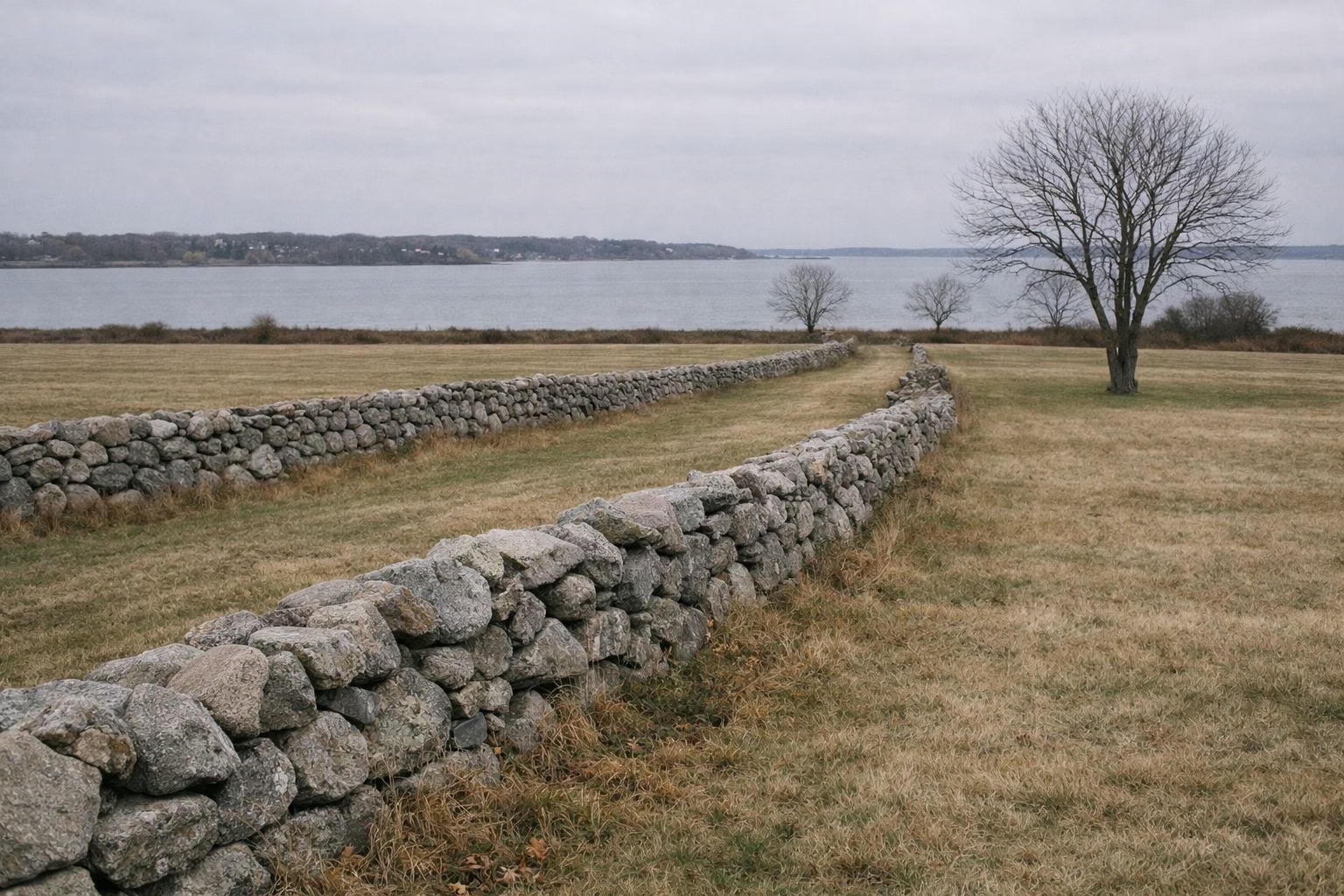
History of Colt State Park
Colt State Park was Samuel P. Colt's private farm and estate on Poppasquash Neck in Bristol, assembled from 1905 out of older family farms. Colt opened it to the public under a marble inscription that read "Colt Farm: Private Property, Public Welcome." After his death in 1921 and years of family disputes, the State of Rhode Island bought the land in 1965 and Governor John H. Chafee dedicated it as a state park in 1968.
History at a Glance
The DeWolfs and the Colts
RI DEM's history of the park ties it to the history of Bristol itself. Samuel P. Colt was a grandson of the DeWolf family, who built Bristol into a thriving port in the late 18th and early 19th centuries. DEM is direct about how: the DeWolfs carried on the slave trade after Rhode Island had outlawed it, kept plantations in Cuba and fleets of ships, built mansions on Hope Street, and when their empire collapsed in 1825 it dragged the town into bankruptcy. Linden Place, an 1810 mansion on Hope Street built by a family of slave traders and merchants, now tells that story as a museum.
A generation later, the Colt brothers, grandsons of George DeWolf, moved back to Bristol. LeBaron Colt became a U.S. Senator. His brother Samuel Pomeroy Colt, also a lawyer, rebuilt the family fortune in banking and manufacturing between about 1875 and 1915. DEM credits him with assembling local banks into the Industrial Trust Company, the forerunner of Fleet Bank, and knitting rubber companies in Bristol, Providence and Woonsocket into the United States Rubber Company, later Uniroyal. He was president of Industrial Trust until 1908 and of U.S. Rubber until 1918, and he funded local projects like the Colt Memorial High School.
Building Colt Farm
Beginning in 1905, Colt bought up the parcels that became his farm on Poppasquash Neck, the peninsula between Narragansett Bay and Bristol Harbor. DEM names the farms he combined: those of the Chase, Church and Van Wickle families. The finished estate was a showcase of wealth. A pair of bronze bulls marked the approach. Along the drive to the main house, the barns, the stables and a party casino, Colt placed European sculpture and statues of Greek gods and goddesses. DEM repeats a relative's joke that the drive to the casino was "Wall Street," an avenue of "bulls and bares."
Prize Cattle and Percherons
Colt ran the farm to breed prize Jersey cattle, and the great stone cow barn is one of the buildings that still stands in the park. DEM quotes local histories on how far he went: one employee for each cow, polished horns, tails washed daily, cork and rubber over the concrete floor, and a barn heated in winter. Each summer his best Jerseys and his Berkshire sows travelled in padded railroad cars to fairs across the East; in one season the sows won 125 ribbons. Colt would not use tractors. Percheron draft horses worked the fields, hauled hay, and in winter pulled the snow plows, wearing blankets against the wind off the bay. Their wooden barn still stands on a hill across the salt marsh from the stone barn.
"Private Property, Public Welcome"
The inscription at the main entrance was more than a slogan. DEM's history describes families walking out from town on pleasant days to picnic in the fields and dig clams and quahogs in the Mill, the tidal inlet now called Mill Gut. Workers in white guided visitors through the stone barn, showed off the prize cows and handed out glasses of fresh milk; the white-tile ceiling was kept clean enough to reflect the whole herd. In summer, trains from Providence brought guests to Bristol, where cars or carriages carried them to parties at the farm's casino.
From Estate to State Park
Samuel P. Colt died in 1921. Disputes over his will stalled the Metropolitan Park Commission's attempt to acquire the property in 1935, and the Industrial Trust Company managed the estate for decades. In 1965 the state bought the farm with Green Acres funds, and Governor John H. Chafee dedicated Colt State Park in 1968. DEM's history counts what the park opened with: an open-air Chapel by the Sea overlooked by a statue of Chafee, ten playing fields, six picnic groves, restrooms, a public boat ramp and four miles of walking, jogging and bicycle trails.
Coggeshall Farm
The 1965 purchase also included a 48-acre farm on the estate. According to Coggeshall Farm Museum, members of the Bristol Historical Society asked Governor Chafee to save its 18th-century tenant farmhouse from demolition; the society signed a lease in 1968, and the museum became its own nonprofit in 1973. It is now run by Old Sturbridge Village. See Coggeshall Farm.
The Park Today
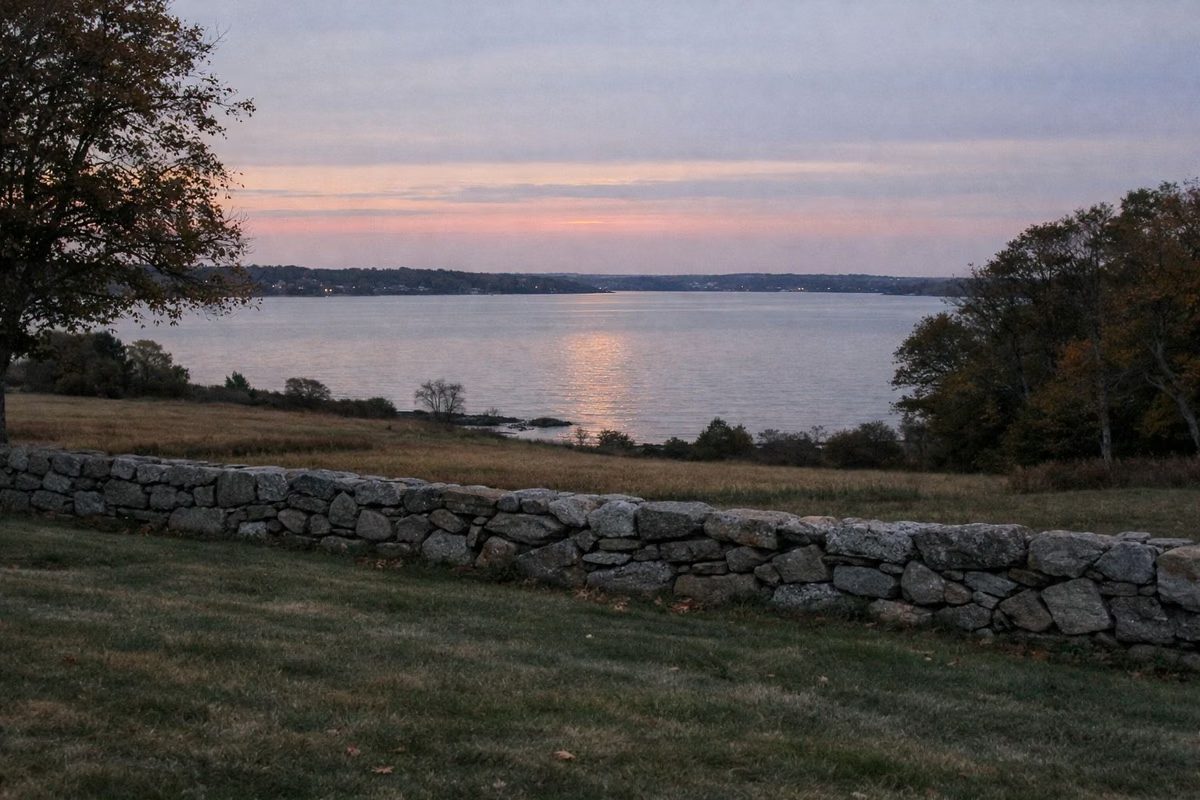
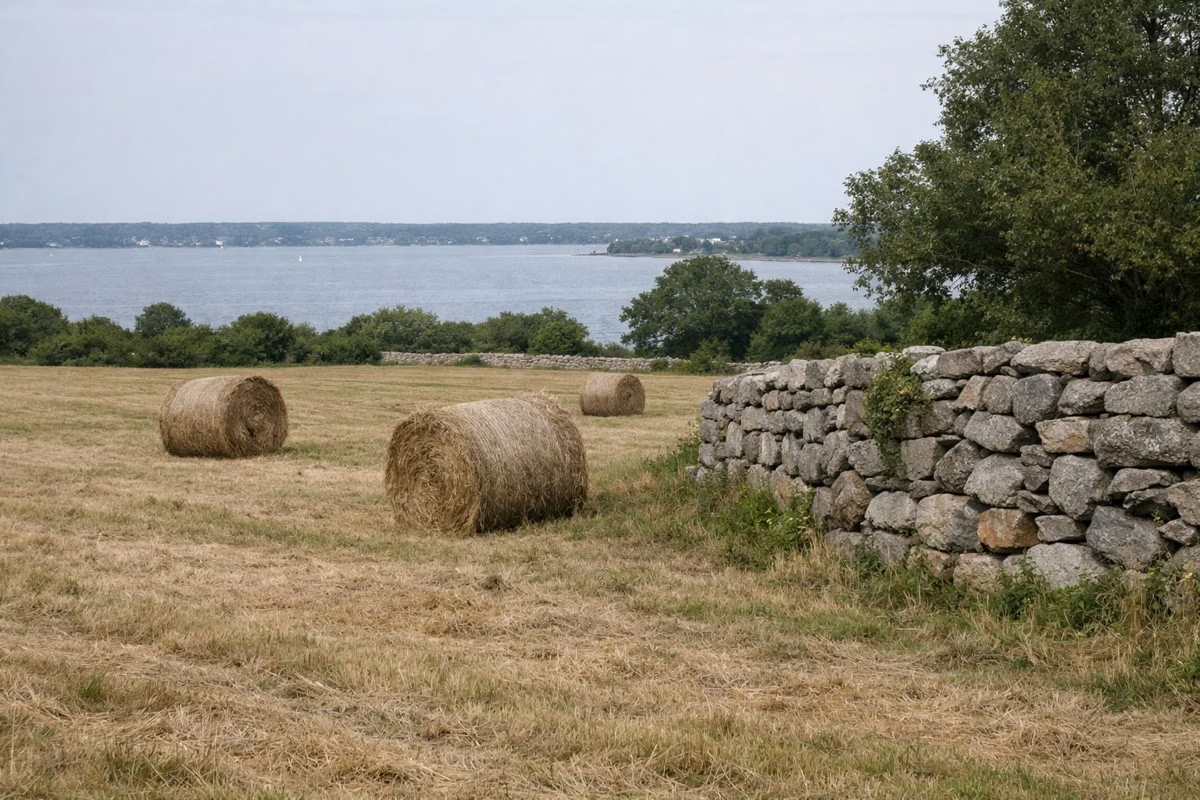
DEM now manages 464 acres of lawns, stone walls and shoreline here and calls Colt the "Gem" of the state park system. The bronze bulls, the stone barn and the stone walls are the pieces of Colt Farm you can still see. A new DEM visitor center and operations building is under construction from spring 2026 to late 2027. The park map shows today's layout.
History of Colt State Park FAQ
Who was Colt State Park named after?
Samuel Pomeroy Colt, a Bristol lawyer, banker and industrialist who built the Industrial Trust Company and the United States Rubber Company. The park was his private farm and estate, assembled from 1905.
When did Colt State Park open?
The State of Rhode Island bought the Colt estate in 1965 with Green Acres funds, and Governor John H. Chafee dedicated Colt State Park in 1968.
What does "Private Property, Public Welcome" mean at Colt State Park?
It was the inscription in marble at the main entrance to Colt Farm. Samuel P. Colt let the public picnic and walk on his estate long before it became a state park.
Where is Poppasquash Neck?
Poppasquash Neck is the peninsula in Bristol, Rhode Island, between Narragansett Bay and Bristol Harbor, where Samuel P. Colt assembled his farm from 1905. Colt State Park covers much of it.
How This Site Checks Facts
This is an independent visitor guide to Colt State Park. It is not run by or affiliated with the Rhode Island Department of Environmental Management (RI DEM), Division of Parks & Recreation.
Hours, fees, rules and trail figures are checked against the RI DEM page for Colt State Park, last on October 18, 2026. Where this site and the agency differ, the agency is right.
If something here is out of date, please tell us through the contact page.